

It seems inconceivable that the Master Yeshua, though sinless, could be truly tempted by sin. But what if Yeshua’s temptation was, in fact, not only legitimate, but meant for our benefit?
Read more
Articles & Answers
It seems inconceivable that the Master Yeshua, though sinless, could be truly tempted by sin. But what if Yeshua’s temptation was, in fact, not only legitimate, but meant for our benefit?
Read more

Nearly every translation of Hebrews 4:12 tells us that, “the word of God is living and active, sharper than any two-edged sword, piercing to the division of soul and of spirit, of joints and of marrow, and discerning the thoughts and intentions of the heart” (esv). The phrase “the word of God” is widely understood to be referring here to the written word of God—the Scriptures. Therefore, the author is providing commentary on the living, powerful nature of that word. This is what is universally taught… and yet, it is totally wrong. Though the Bible is indeed God’s awesome, powerful, written word, the author of Hebrews is actually teaching us about something completely different.
Read more

Israel had just been mightily redeemed and delivered from Egypt. The God of Abraham, Isaac and Jacob had done as He had promised: He saved his people from slavery, brought them safely through the Red Sea, and soundly destroyed their enemy through powerful signs and wonders. Yet in no time, barely started on their desert journey, the people found themselves unable to trust in their self-evident Savior. Already, they were threatening and grumbling against God’s man Moses because they were without water. So God instructed Moses to strike a rock with his staff, producing a miraculous outpouring from which the people could drink. Moses then called that place Massah and Meribah (Exodus 17:7)—meaning “testing” and “provoking”—because they had tested and provoked God through their unbelief of His presence and power.
Read more

The awesome and deeply profound book of Hebrews (Iv’riym) begins with a revelation of the Son—not only of His divine preeminence, but of His Deity. In other words, the Son of God—Yeshua—is God. Yet it is not the Son’s deity alone which makes Yeshua perfect. Surprisingly, as we learn in Hebrews chapter 2, there was something that at one time even God couldn’t do. That’s why the Son’s perfection comes through His humanity.
Read more

Perhaps one of the most awe-inspiring pieces of writing in all of Scripture—and more than worthy of this new series—is the anonymous letter to a group of Messianic Jews, commonly known as the book of Hebrews (Iv’riym). The letter is believed to have been written in 69 AD, shortly before the destruction of the Temple and during a time of continuing oppression and persecution of the believers. In it, the author aims to encourage and strengthen his fellow Jewish believers who were having difficulty staying true to their brand-new, Messianic faith, and does this by expertly building a case for having complete trust in the author and perfecter of that faith: Yeshua.
Read more

Does the Bible teach that baptism is necessary for salvation? We know that Yeshua considers it important and normative for the believer, but is it necessary? Let us consider 1 Keifa (Peter) chapter 3, as arguably the strongest passage in favor of this position. For the purposes of this article, we will assume that baptism is immersion, as it is consistently depicted in the Scriptures.
Read more
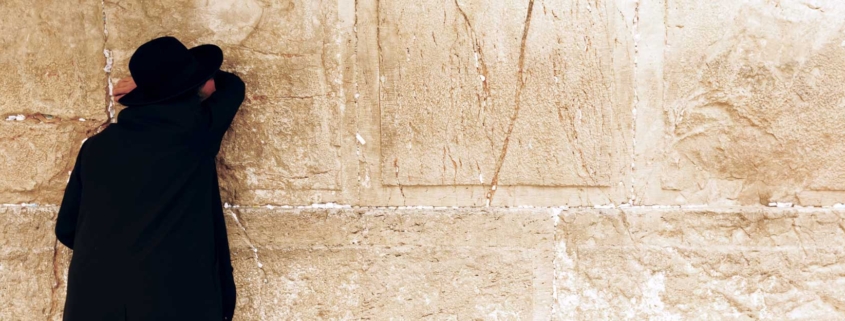
Judaism teaches that the idea of a man being God—especially the man Yeshua—is in total conflict with the Hebrew Scriptures. Indeed, so staunchly is this believed that the translators of the Jewish Publication Society Tanakh (JPS) seemingly went to some lengths to reinterpret specific Scriptures, obscuring the plain sense that would otherwise overtly hint at a Messiah who is, in fact, God.
Read more

Within Judaism, Messianic Judaism, Jewish Roots, and every adjacent movement, it is universally accepted and taught without question that God gave the Torah to Israel on Shavuot. As such, it is widely held that our observance of Shavuot should also commemorate the receiving of the Torah because that momentous event occurred on the very same date as the Feast. But is it true? Was the Torah really given on Shavuot? Is such an assertion actually biblical? And if not, how should that effect our understanding and celebration of one of the major Feasts of Israel? Read more

When we come to Yeshua for salvation from our sin, it is because we have realized our deep, eternal need, and the great treasure and benefit in accepting what He’s offering. Along with this salvation, God then grants us His generous and gracious gifts, not the least of which is His faithful and unending love. The knowledge and reality of Yeshua’s sacrifice fills and touches us in our inmost being, producing thoughts and feelings of appreciation, gratitude, thankfulness, passion, and profound, overflowing joy. This is the Jesus that most believers know and are more than happy to follow—the one who loves abundantly and gives generously; the one who is gentle and lowly in heart; the one whose yoke is easy and burden is light.
Read more

When we believe in Yeshua and come to Him for salvation from our sins, we also receive the down-payment for that salvation through the gift of the Ruach HaQodesh (the Holy Spirit). But the Spirit does not connect and interact with us so that He can just live quietly and inactively within us—nor to be the object of our euphoric fixation or ecstatic zeal—but so that we can fully proclaim the Good News of Yeshua in power.
Read more

Join our mailing list to receive the free Perfect Word enews, and our monthly teaching newsletter.