• Link to X
  • Link to Youtube
  • Link to Mail
  • Become a Partner
  • Join Our eNews List
  • Kevin’s Blog
  • MJMI
  • My Account
   a Messianic Jewish Equipping Ministry
  • Shopping Cart Shopping Cart
    0Shopping Cart
  • Video / Podcast
  • Teachings
    • A Word from Kevin
    • Exhortations
    • Understanding the Scriptures
    • Challenging Paradigms
    • Fast Foundations
    • Jewish Identity
    • The Gentile Chronicles
    • Messy Messianics
    • “Holidays” & “Feasts”
    • Strengthening the Called-Forth
    • Our Values
      • Discipleship
        • The Scriptures
        • Fundamentals of the Faith
    • Homeschooling
  • Store
    • The Gospel According to Israel
    • Messianic Jewish Literal Translation
    • Bearing the Standard
    • Messianic Devotionals
    • The Messianic Life: Being a Disciple
    • Not By Faith Only
    • Passover Resources
    • The Real Story of Chanukah
    • Deny Yourself (Yom Kippur)
    • eBooks
    • Small Group Resources
    • Fall Feast Resources
    • Discounted Multi-Packs
    • CD / MP3 Teachings
    • Make a Donation
    • Defective / Discounted
  • Store
  • Cart
  • My Account
  • Subscribe
  • Donate
  • About
    • Introducing Perfect Word
    • Our “Staff”
    • Mission, Vision & Faith Statements
  • Contact Us
  • Click to open the search input field Click to open the search input field Search
  • Menu Menu
Understanding the Scriptures

Secondary Sources: More Harm Than Good?


In the world of Bible study, there are several types of great tools, such as Concordances and Lexicons, to help us successfully navigate the teachings of the Bible. Beyond these, many people also rely on secondary, extra-biblical sources for their study, knowledge and understanding—and for good reason. There is an inordinate amount of Bible-related information that is simply not contained or well-developed in the Bible. But the problem is that, when it comes to understanding Scripture itself, many will mistakenly turn to secondary sources first, rather than to God’s word. Secondary sources make it extremely easy to find answers to biblical questions… perhaps, too easy.

Take Bible Dictionaries or Encyclopedias, for example. These resources are used to learn about things such as the different Jewish sects of the first century, ancient units of measurement, biblical character portraits, and much more. When dealing with factual subjects, their entries are likely to be accurate and educational—albeit extraneous, potentially distracting from what is truly important, and generally holding little everyday value for the life of the believer. Bible Dictionaries and Encyclopedias also often address theological subjects such as salvation, atonement, or the deity of Yeshua. In these cases, the various authors tend to take much more liberty with their topic, and are free to infuse their own subjective, theological ideas, which can color our understanding.

Similarly, Commentaries also face this possible issue. Un­like Dictionaries and Encyclopedias, Commentaries are primarily theological in nature, containing short articles that specifically correspond to particular Bible verses or passages, rather than being topical. The breadth of work evident in a commentary can give the impression that the author possesses an uncommon amount of biblical knowledge, and therefore his work should carry greater weight. But it shouldn’t. As with anyone’s teachings, the correctness of the commentary will depend entirely on the theology of the commentator. Even a highly-regarded commentary can contain incorrect Bible interpretation. Eigh­teenth century scholar Matthew Henry, for instance, taught in his six-volume, exhaustive commentary of the Bible that true and real Christians are now the true and real Jews. Paul begs to differ (Romans 2:28-3:2).

Study Bibles, as well, can be particularly problematic. These specially-published Bibles embed supplementary material directly next to, above and below the text of Scripture itself. Although this makes for an extremely convenient study resource, the format has a severe lack of barrier between God’s pure word and the fallible words of man. It constantly bombards the reader with information and concepts that he might never even dream of, were it not for the intrusion of human thoughts and ideas imposing themselves on the precious pages of Scripture. This is precisely what happened through the teachings of the 20th century Scofield Reference Study Bible, which proposed and enshrined the errant idea that an earth millions of years old is biblically compatible with the word of God. Study Bibles are troublesome because they butt the words of men directly up against the words of God, which unavoidably gives that material an undue influence, if not authority, over the reader’s understanding of the text.

Did this post bless you?

♥

Donate

Whenever we over-rely on things like Bible Dictionaries or Encyclopedias, Commentaries, Study Bibles, or even sermons and the religious writings of our various faith traditions, we will inevitably adopt the points of view of those teachers, scholars and experts, and then filter what the Bible actually says through those secondary sources. When we aren’t getting our biblical understanding primarily from reading the Scriptures for ourselves, those other voices become God’s word to us. We need to differentiate between resources that simply help us read the Bible, and resources that tell us what they think the Bible means.

So use secondary sources sparingly, if at all. Remember that God’s word is the one word that should carry the most weight, and to limit all other voices so that the Scriptures can clearly speak for themselves.

What do you think? Share your thoughts in the comments below!


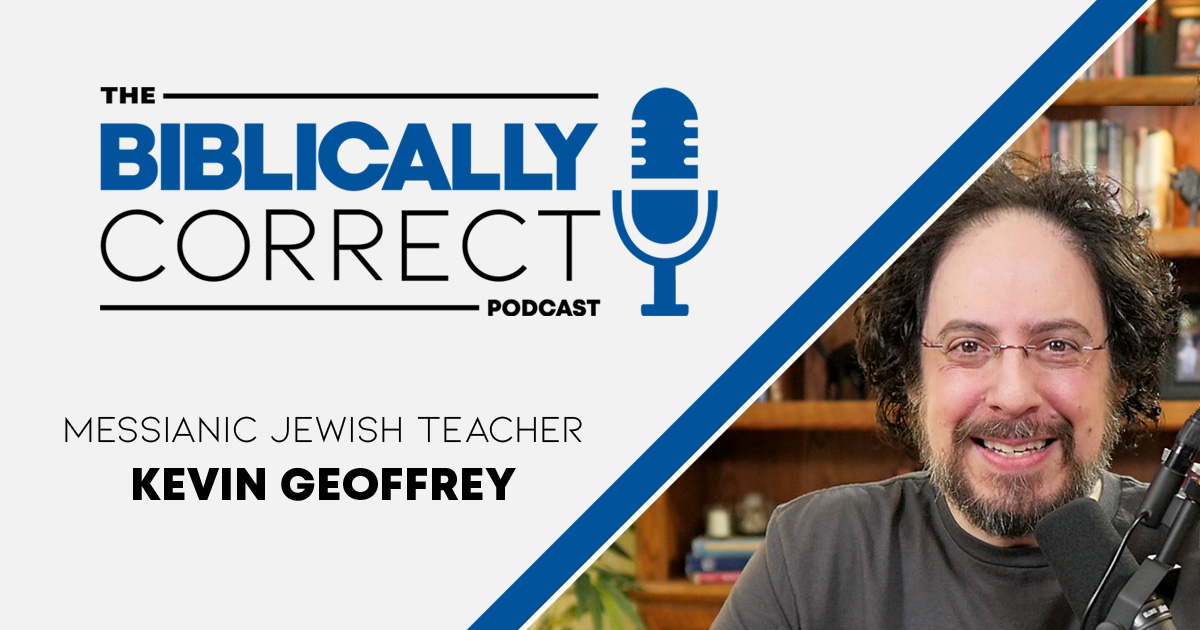
WATCH or LISTEN TO the full teaching on The Biblically Correct Podcast!

Go to https://www.biblicallycorrectpodcast.org/ep19
May 1, 2022/2 Comments/by Kevin Geoffrey
Share this entry
  • Share on Facebook
  • Share on X
  • Share by Mail
https://www.perfectword.org/wp-content/uploads/2022/04/secondary_sources_banner.jpg 625 2560 Kevin Geoffrey https://www.perfectword.org/wp-content/uploads/2022/03/PW-logo.svg Kevin Geoffrey2022-05-01 05:00:472022-05-16 17:26:29Secondary Sources: More Harm Than Good?
2 replies
  1. Trish Tipton
    Trish Tipton says:
    May 24, 2022 at 5:03 pm

    Just curious…If you’re not able to read the original Hebrew or Greek and want to understand the scripture from the original text, would you recommend using an Interlinear Hebrew, Greek, English Bible?

    Reply
    • Kevin Geoffrey
      Kevin Geoffrey says:
      May 26, 2022 at 7:07 am

      Shalom Trish. Please check out my post and podcast on Bible Study Tools. Blessings! https://www.perfectword.org/2022/03/01/why-bible-study-tools/

      Reply

Leave a Reply

Want to join the discussion?
Feel free to contribute!

Leave a Reply Cancel reply

Your email address will not be published. Required fields are marked *

Search Search
  • Recent
  • Popular
  • Comments

Archives

  • June 2026
  • May 2026
  • April 2026
  • March 2026
  • February 2026
  • January 2026
  • November 2025
  • October 2025
  • September 2025
  • August 2025
  • June 2025
  • May 2025
  • April 2025
  • March 2025
  • February 2025
  • January 2025
  • November 2024
  • October 2024
  • September 2024
  • August 2024
  • July 2024
  • May 2024
  • April 2024
  • March 2024
  • February 2024
  • January 2024
  • November 2023
  • October 2023
  • September 2023
  • August 2023
  • July 2023
  • June 2023
  • May 2023
  • April 2023
  • March 2023
  • February 2023
  • January 2023
  • November 2022
  • October 2022
  • September 2022
  • August 2022
  • July 2022
  • June 2022
  • May 2022
  • April 2022
  • March 2022
  • February 2022
  • November 2021
  • October 2021
  • September 2021
  • August 2021
  • July 2021
  • June 2021
  • April 2021
  • March 2021
  • February 2021
  • January 2021
  • November 2020
  • October 2020
  • September 2020
  • August 2020
  • July 2020
  • June 2020
  • May 2020
  • April 2020
  • March 2020
  • February 2020
  • January 2020
  • November 2019
  • October 2019
  • September 2019
  • August 2019
  • July 2019
  • June 2019
  • May 2019
  • April 2019
  • March 2019
  • February 2019
  • January 2019
  • November 2018
  • October 2018
  • September 2018
  • August 2018
  • July 2018
  • June 2018
  • May 2018
  • April 2018
  • March 2018
  • February 2018
  • January 2018
  • November 2017
  • October 2017
  • September 2017
  • August 2017
  • July 2017
  • June 2017
  • May 2017
  • April 2017
  • March 2017
  • February 2017
  • January 2017
  • November 2016
  • October 2016
  • September 2016
  • August 2016
  • July 2016
  • June 2016
  • April 2016
  • March 2016
  • October 2014
  • June 2014
  • August 2013
  • June 2013
  • May 2013
  • April 2013
  • February 2013
  • November 2012
  • October 2012
  • September 2012
  • August 2012
  • July 2012
  • June 2012
  • May 2012
  • April 2012
  • February 2012
  • January 2012
  • December 2011
  • November 2011
  • October 2011
  • September 2011
  • August 2011
  • July 2011
  • June 2011
  • May 2011
  • April 2011
  • March 2011
  • February 2011
  • January 2011
  • December 2010
  • November 2010
  • August 2010
  • July 2010
  • March 2010
  • February 2010
  • January 2010
  • November 2009
  • September 2009
  • July 2009
  • June 2009
  • March 2009
  • February 2009
  • January 2009
  • December 2008
  • March 2008
  • January 2008
  • October 2007

Pages

  • Contact Us
  • Teachings
  • Resource Center
  • Partner With Us
  • Subscribe
  • About Perfect Word
  • MJLT Daily Reading & Calendar
  • Messianic Jewish Movement Intl
  • The Biblically Correct Podcast

Webstore

  • My Account
  • Cart
  • Checkout
  • Bookstore Discounts
  • Shipping & Returns

Teachings

  • A Word from Kevin
  • Exhortations
  • Challenging Paradigms
  • Fast Foundations
  • Jewish Identity
  • The Gentile Chronicles
  • Messy Messianics
  • “Holidays” & “Feasts”
  • Our Values
© Perfect Word Ministries
  • Link to X
  • Link to Youtube
  • Link to Mail
Link to: The Best Way to Interpret Scripture Link to: The Best Way to Interpret Scripture The Best Way to Interpret Scripture Link to: Are We Supposed to Take the Bible Literally? Link to: Are We Supposed to Take the Bible Literally? Are We Supposed to Take the Bible Literally?
Scroll to top Scroll to top Scroll to top

SUBSCRIBE

Join our mailing list to receive the free Perfect Word enews, and our monthly teaching newsletter.

SIGN UP NOW!