Yeshua’s Blood Nullifies Sin


The Messiah Yeshua, through the sacrifice of Himself, paid for the atonement of our sins. And yet, this was no random redemption. The removal of sin does not arbitrarily result from a selfless act of pure love, even by the Son of God. On the contrary, Yeshua’s death was legally necessary in order to initiate the New Covenant that God was making with Israel—the one which promises “their sins I will remember no more” (Hebrews 8:12, mjlt). Everlasting atonement for sin would require a new covenant. And for the ratification of that covenant—as He had for the first covenant—God would require blood.
It is standard practice for biblical covenants to be initiated through the death of an innocent. As the author of Hebrews explains, “where there is a בְּרִית, b’riyt [covenant], the death of the sacrifice that makes the בְּרִית, b’riyt is necessary to come in, because only a בְּרִית, b’riyt made over dead sacrifices is in effect, since it has no force at all when the sacrifice that makes the בְּרִית, b’riyt lives (Hebrews 9:16-17, mjlt).
In other words, two parties may agree to whatever they wish, but until the covenantal sacrifice is made and its blood is shed, the covenant can never go into effect. Such is the way of biblical covenants. Because as Hebrews also points out, “not even the B’riyt הָרִאשֹׁנָה, HaRishonah [the first covenant, that is, the Torah] has been initiated apart from blood” (Hebrews 9:18, mjlt). What this then means for the effectiveness of the New Covenant is that, with regard to enactment by blood, nothing has changed. Just as God required blood for the initiation of the “first covenant,” so also does He require it for the New. And the sacrifice which provides that blood is Yeshua’s.
The similarity between covenantal initiation does not end there. For the ratification of the Torah, the sacrificial blood was used to cover the implements of the Tent of Meeting (see Exodus 24:6-8). Hebrews affirms this, saying that “with blood, almost all things are purified according to the תּוֹרָה, Torah; and apart from blood-shedding, forgiveness does not come” (Hebrews 9:22). The second half of this statement is an allusion to Leviticus 17:11, which says, “for it is the blood which makes atonement in the soul.” So as established in the Torah, only blood provides the way of atonement and forgiveness.
It is on this same basis, then, that Yeshua’s blood is needed for the enactment of the New Covenant. Just as the things of the earthly Tent under the first covenant were purified and atoned for by blood, the things of the heavenly Tent—after which the earthly Tent is patterned (Hebrews 8:5)—also need to be purified. And “if sprinkling the blood of goats, and of bulls, and ashes of a heifer upon those who are defiled sets them apart to the purifying of the flesh, how much more, then, will the blood of the Messiah” put the New Covenant into effect and “purify our conscience from dead actions to serve the Living God?” (Hebrews 9:13-14, mjlt).
But this is where the similarity ends. Under the first covenant, atonement had to made every year on the Day of Atonement “with the blood of others” (9:25)—the High priest slaughtering the bull and goat for the forgiveness of both the people’s sins as well as his own. But under the New Covenant, Yeshua entered Heaven “not to offer Himself many times… since it would then be necessary for Him to suffer many times from the foundation of the world” (9:25f). But instead, Yeshua’s sacrifice is so unmatched—so awesome and complete—that “through His own blood, [He] entered in once for all into the holy places” of Heaven, thereby accomplishing the “nullification of sin” through His perfect, singular sacrifice (9:26).
Did this post bless you?
♥
Adonai teaches us in His Torah that “the life of the flesh is in the blood, and I have given it to you on the altar to make atonement for your souls” (Leviticus 17:11, mjlt). Blood is life, and the life-blood of an innocent shed on behalf of another covers over and redeems his life from sin. Yeshua gave His own life to inaugurate the New Covenant with His own blood in order to obtain our everlasting redemption (Hebrews 9:12). And in so doing, He put the full force of the New Covenant into effect, “having been offered once, to bear the sins of many” (9:28).
What do you think? Share your thoughts in the comments below!
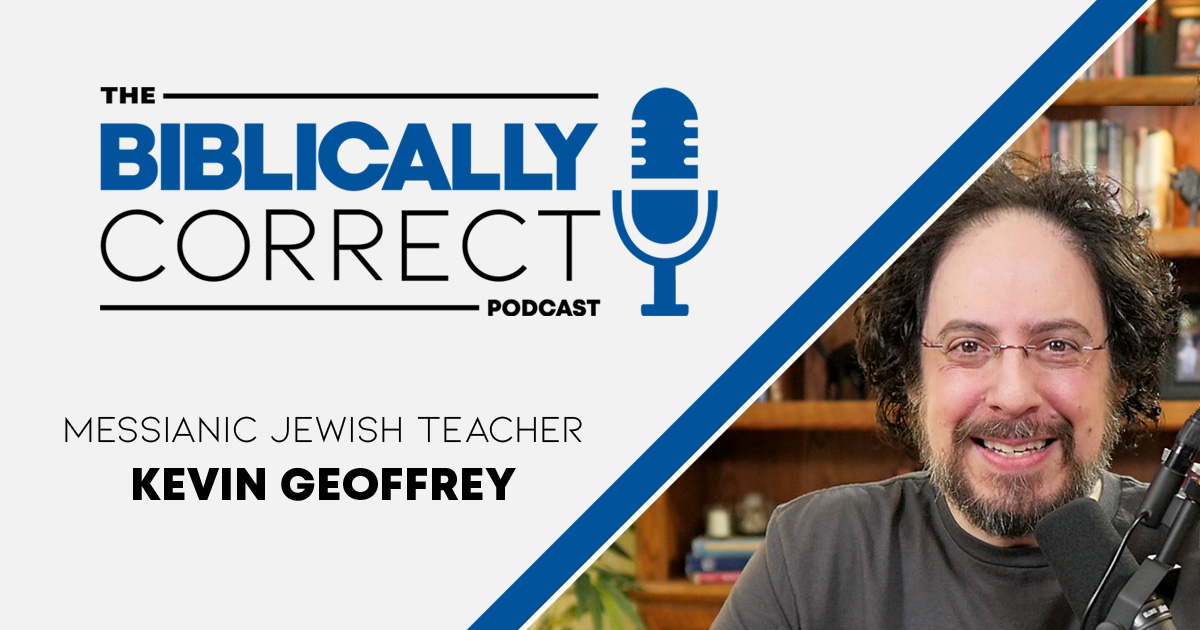
WATCH or LISTEN TO the full teaching on The Biblically Correct Podcast!
Go to https://www.biblicallycorrectpodcast.org/ep87



Leave a Reply
Want to join the discussion?Feel free to contribute!