An ancient voice keeps calling out, “In the wilderness, prepare the way of Adonai; make straight in the desert a highway to our God” (Isaiah 40:3). The prophetic call to be God’s trail blazers has been passed down through the generations—from Elijah (see 1Kings 18:36-37), to Isaiah, to John the Immerser/“Baptist” (see Matthew 11:10-14)—and it will continually resound until the Day the Master Yeshua triumphantly returns (see Malachi 4:5-6). Yet for today, “the way of Adonai” goes woefully unprepared. In our generation, we have misunderstood the instruction and wandered far from the path of our prophetic purpose. We have wrongly imagined “prepare the way” as a call to build, when it is, in fact, just the opposite. Read more

A: Perhaps it will help to look at this issue from a different perspective. When Adonai instituted the annual calendar for Israel’s feasts and appointed times, He based it on the Land’s natural agricultural and seasonal schedule. Passover, for example, is in the Spring, at the beginning of the harvest season; Shavuot is at the end of the spring harvest going into summer; Sukot wraps up all the harvesting in the Fall. Read more

Audio, which was available on Wednesday, September 26, 2012, is no longer available here. Please go here instead.
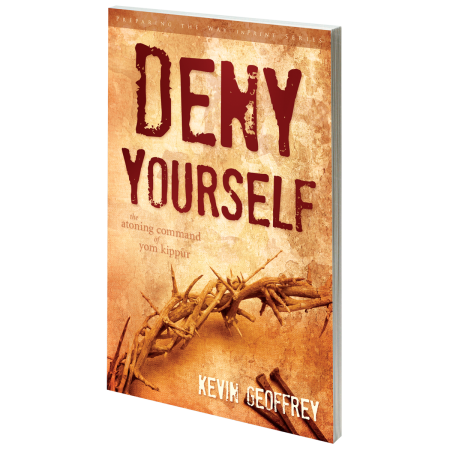
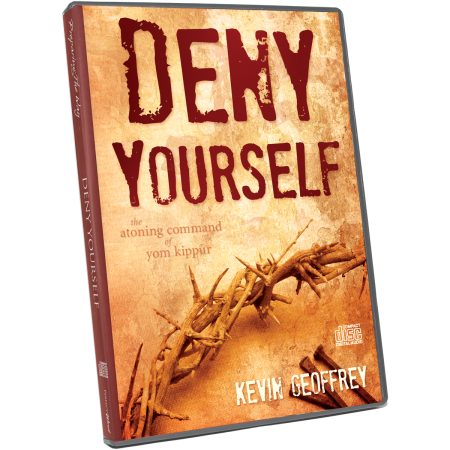
Yom Kippur… the single holiest day on Israel’s calendar—and it is best observed by doing absolutely nothing… the Master Yeshua, our great high priest, has already done it all! The Yom Kippur command to deny oneself is also the heartbeat of those who live for Messiah, in whom this awesome day is fulfilled. For more about “Deny Yourself” and Yom Kippur:
-
Deny Yourself (CD/MP3)
$9.95Original price was: $9.95.$4.95Current price is: $4.95. Sale!Select options This product has multiple variants. The options may be chosen on the product page -
Yom HaKipuriym (Day of the Atonements)
$9.95Original price was: $9.95.$4.95Current price is: $4.95. Sale!Select options This product has multiple variants. The options may be chosen on the product page


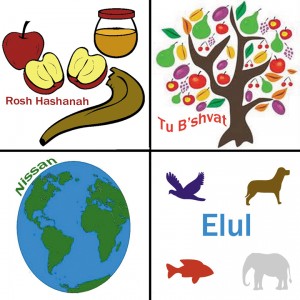
A: Your friend is correct when he says that Judaism understands there to be four calendars (or “new years”), hence the reason the first day of the seventh month is celebrated as “Rosh HaShanah”—the “head of the year.” With all due respect to the Rabbis, however, such an idea cannot be defended from Scripture.
First, while the phrase Rosh HaShanah does occur in Ezekiel 40:1, it is not in reference to the first day of the seventh month. Second, though Exodus 34:22 says that “the revolution of the year” occurs in the seventh month, the phrase is referring to the Feast of Ingathering, which falls on the fifteenth of the month, not on the first. “The revolution of the year” speaks to the circuitous nature of Israel’s agricultural schedule, the harvests of which begin in the Spring and conclude in the Fall. Then the process of planting, sowing and reaping repeats.
Scripture only mentions one beginning of the year: Rosh ’Chadashiym, which means “Head of the Months” (“Months” is literally “New Moons”). Exodus 12:2 calls it “the first of the months of the year,” referring to the month in Spring known Niysan (Ne.2:1, Est.3:7) or Aviyv (Ex.13:4).
So, despite the historical development of Judaism, Adonai established only one annual calendar for Israel, and it begins with the harvest and new life of Spring.
What do you think? How, if at all, should this affect our observance? Other thoughts?
Sound off below.
Throughout the Scriptures, we are frequently exhorted to persevere—to keep pressing forward in the face of adversity. We need this encouragement because our natural tendency is to avoid conflict, trials, troubles, or hardship of any kind—to not persevere. No one likes to suffer and endure pain or discomfort, but if we always travel the path of least resistance, we cannot learn and grow from life’s challenges. As disciples of Messiah, we will all encounter a set of difficulties uniquely designed to cause growth in our lives. How we deal with these trials speaks directly to our level of maturity in Him. Perseverance, then, is the stepping-stone from tribulation to maturity.
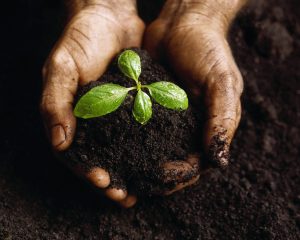
The Master teaches us, “[A sower went out to sow his seed, which is…] the word of God. [The seed that fell] beside the way were those who heard [the word], then the Accuser came and took up the word from their heart, lest having believed, they might have been saved. [The seed that fell] upon the rock [are] those who, when they heard the word, received it with joy. Yet these who have no root believed for a while, but in time of trial, fell away. [The seed] that fell to the thorns [are] those who have heard, but, going forth, were choked through anxieties [about] wealth and pleasures of life, and bore no [fruit] to maturity. But that [seed which fell] on the good soil are these: they, who with an upright and good heart, having heard the word, retain it, and bear fruit with perseverance.” Luke 8:11-15
One of the primary reasons we do not grow and mature in Messiah is simple: we want the “fruit,” but we don’t have the “root.” As the Master’s parable illustrates, there are various kinds of obstacles that keep us from putting down roots and bearing the fruit of maturity. Our uncultivated, rocky soil doesn’t allow the roots to take hold, and the seed is stolen from us so that we cannot withstand the trials of life. If, by chance, a seed does begin to take root, its growth is choked back by the thorns of anxiety until the plant withers and dies. We may receive the seed and even have it planted within us, but without “good soil,” it will not bear fruit and mature.
The disciple of Messiah is to be like “good soil” for the implantation of the Word of God—having heard the Word, we are to “retain it, and bear fruit with perseverance.” The word translated as perseverance is the Greek hupomone, describing a person who is steadfast, consistent, and enduring. In the Master’s parable, this word describes a characteristic of the “good soil”—it steadfastly holds on to the seed, allowing its roots to grow deep and wide.
But instead of offering ourselves up as “good soil,” we often come with our rocks and thorns and our own “ways” of doing things. We put the seed in this soil and think something miraculous will happen. However, it is only in “good soil” that the work of perseverance can be accomplished so that, in turn, the Word of God can do its work and grow us to maturity. We need to put forth the effort to endure trials and tribulations and hold onto—“retain”—the word, so that we may “bear fruit with perseverance.”
A: These are all great questions—thank you for asking!
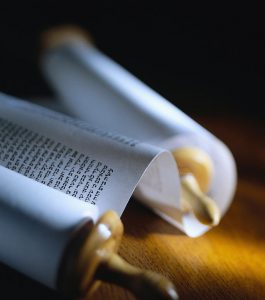
As you probably already know, he Scriptures were written in Hebrew (some in Aramaic) and Greek. So when we read the Scriptures in English, we are reading a translation. By definition, this means that no translation can be absolutely “correct.” A translation requires more than just the conversion of individual words. Concepts and connotations need to be understandable by the receiving audience. The various Bible translations fall along a spectrum between literal and paraphrase. A literal translation attempts to convey the original meanings of words and phrases. A paraphrase focuses on the translation of original ideas and concepts. Many modern translations attempt to preserve a certain level of what is called “dynamic equivalence” with the source texts, trying to strike a balance between the literal and paraphrase ends of the spectrum. Read more